

Turning the Tide
on Zytiga®-Resistant Metastatic Castration-Resistant Prostate Cancer (mCRPC)
Adding Onvansertib to Daily Zytiga is Increasing the Duration of Response to Treatment and Progression-Free Survival
Zytiga®-Resistant Metastatic Castration-Resistant Prostate Cancer (mCRPC)
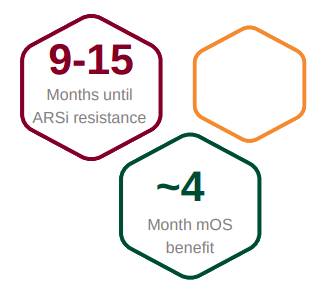
Resistance develops to standard-of-care androgen receptor signaling inhibitors (ARSi) therapy, Zytiga® and Xtandi®, within 9-15 months.
ARSi’s offer a median overall survival (mOS) benefit of only ~4 months
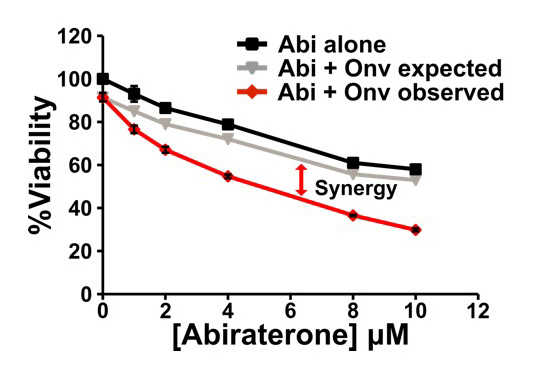
Onvansertib + Zytiga® (abiraterone) Demonstrates Synergy in mCRPC Model (C4-2)
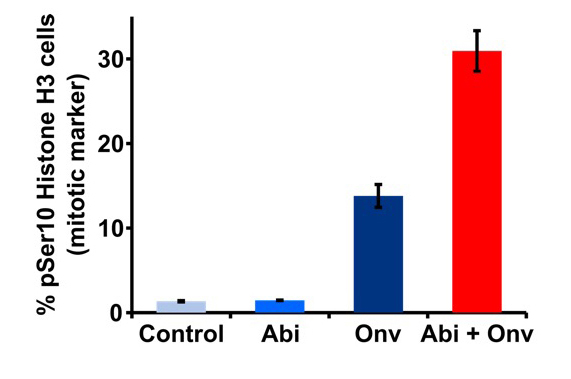
Onvansertib + Zytiga® (abiraterone) Significantly Increases Mitotic Arrest
Why onvansertib is a promising option for mCPRC: Overcoming resistance to Zytiga
Onvansertib in combination with Zytiga (abiraterone) demonstrates synergy in mCRPC and significantly increases the arrest of tumor cell division.
Why onvansertib is a promising option for mCRPC with the AR-V7 mutation:
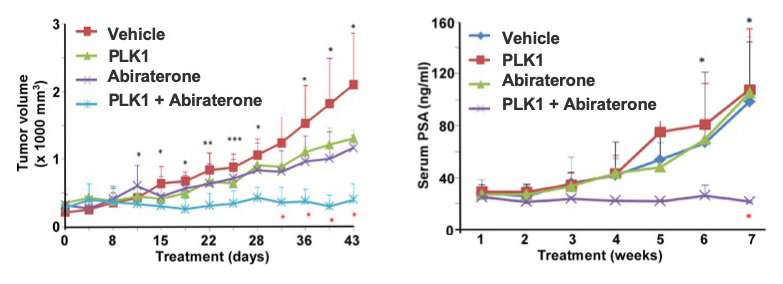
PLK1 inhibitor in combination with Zytiga (abiraterone) blocks tumor growth and PSA increase in AR-V7 positive CRPC preclinical model.
The combination of Zytiga (abiraterone) and onvansertib reduces AR and AR-V7 protein expression in CRPC cell lines.
PLK1 Inhibition Enhances the Efficacy of Androgen Signaling Blockade in Castration-Resistant Prostate Cancer
Onvansertib in Combination with FOLFIRI/Avastin® is Demonstrating Safety and Efficacy in KRAS-Mutated Metastatic Colorectal Cancer
Phase 2 multi-center open-label clinical trial NCT03414034
“This data shows that adding onvansertib to abiraterone in metastatic castration-resistant prostate cancer patients with an early resistance to abiraterone validates pre-clinical studies and shows potential as a new therapeutic option.”
Dr. David Einstein, principal investigator at the Beth Israel Deaconess Medical Center
Efficacy in patients with AR alterations:
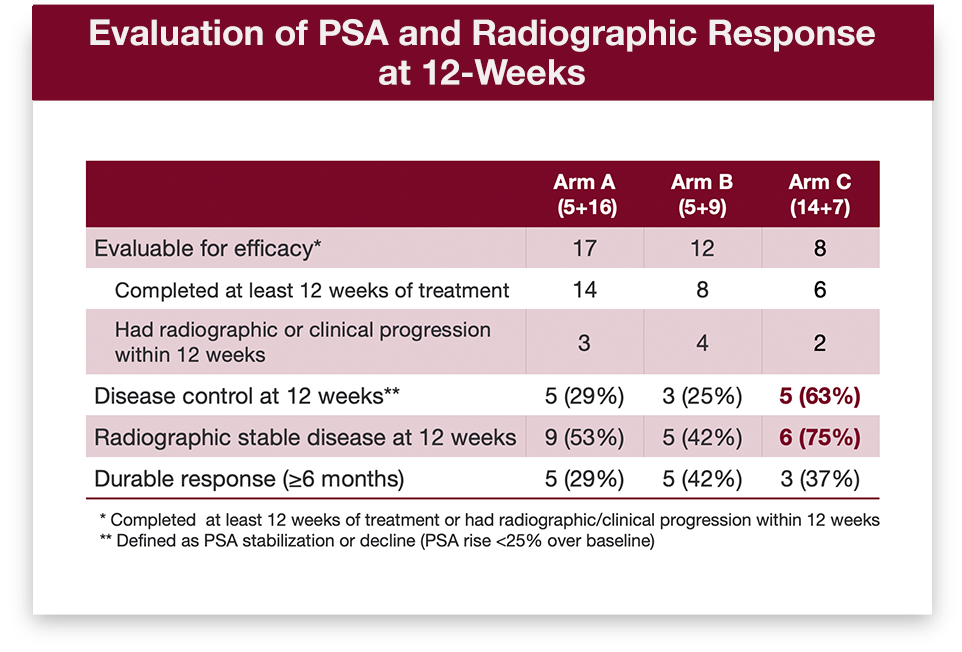
Nineteen (53%) patients had at least 1 AR alteration associated with abiraterone-resistance (AR-V7 expression, AR mutation T878A and/or amplification of AR)1:
- 5 (26%) patients had disease control at 12 weeks
- 8 (42%) patients had radiographic stable disease at 12 weeks
Onvansertib-Induced CTC Decrease is Associated with Progression-Free Survival
Circulating tumor cell (CTC) count, reported as favorable or unfavorable (<5 versus ≥5 CTC/7.5mL of blood, respectively) is a prognostic factor for survival in CRPC – conversion from unfavorable to favorable is associated with improved survival[/et_pb_text][/et_pb_column][/et_pb_row][et_pb_row make_fullwidth="on" custom_padding="27px|0px|0px|0px" _builder_version="3.0.78"][et_pb_column type="1_2" _builder_version="3.0.47" parallax="off" parallax_method="on"][et_pb_text _builder_version="3.0.78"]10 patients with unfavorable CTC at baseline were re-analyzed after 12 weeks of treatment:
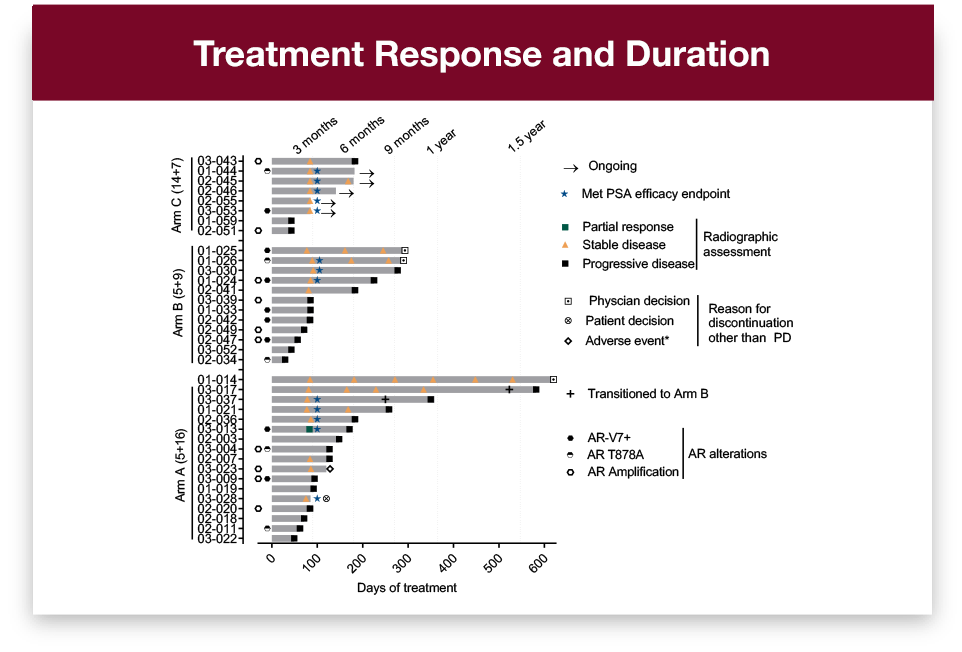
- 5 (50%) patients had an ≥80% CTC decrease, including 2 AR-V7+ patients (01-024 and 01-025)
- 4 (40%) patients converted from unfavorable to favorable CTC level, including 3 patients with no detectable CTC
- Median time on treatment was 9.2 months for patients with CTC decrease (n=5) vs 4.9 months for patients with CTC increase (n=5)
